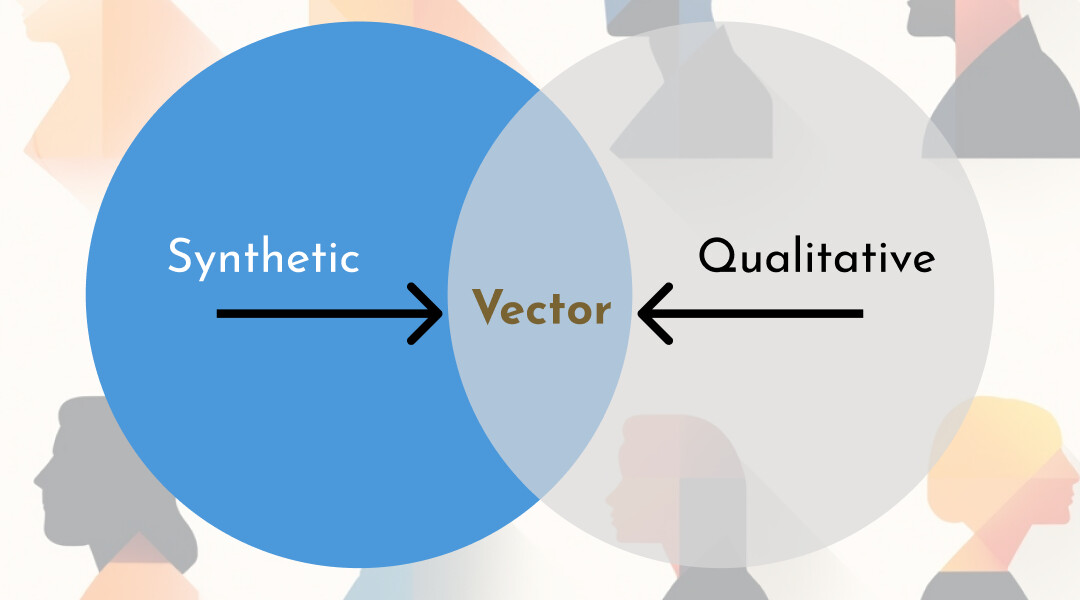
In a recent article by Jeremy Johnson, citing a recent ASU study which ‘pitted human-developed personas (qualitative) against AI-generated personas (synthetic)’ where the human personas won, Jeremy posits that it’s the ‘Vector’ in between the two that actually wins the day. He combines the three approaches to obtain his results:
He also cites additional work posted by The Journal of User Experience on moving toward a hybrid approach for better accuracy, faster time-to-value, and update efficiencies(imho - where AI shines the most, updating conditions which have an effect on persona results).
What are everyone’s thoughts on this proposed innovation in the field of UX and User Research?
it has become crucial to recognize that these systems are inherently non-human entities and have limited ability (Salminen et al., 2020) to convey real-life examples of human experiences and behaviors.
Research tools could create a huge database of quotes from particular audiences. This would allow someone to build a resource for injecting real data into formulated personas.
Pretty cool @Kevin_Schumacher! The vector idea shows how AI and qualitative research aren’t in competition, but complementary when used together. Spot on.
This is exactly where I think AI can be most useful for product design! Use it to drum up general ideas that you might miss while brainstorming a persona, but don’t rely completely on it’s algorithm to made decisions for your team.
Also, I thought how it was funny that the article lists the drawback of the human-created persona as simply needing a cadence of being refreshed, while AI-created personas need to be watched for “hallucinations and overconfidence”.
I think the vector approach is how we’re building our assessment right now! Input from the AI to guide our prompt writing, while being driven by training data and now our own quality rating/assessment system to drive new iterations.